
Patient-safety-grade monitoring for clinical and triage agents.
We ask your clinical and triage agents the questions your patients ask, from the regions they actually call from. And we flag the moment guidance drifts away from your clinical policy.
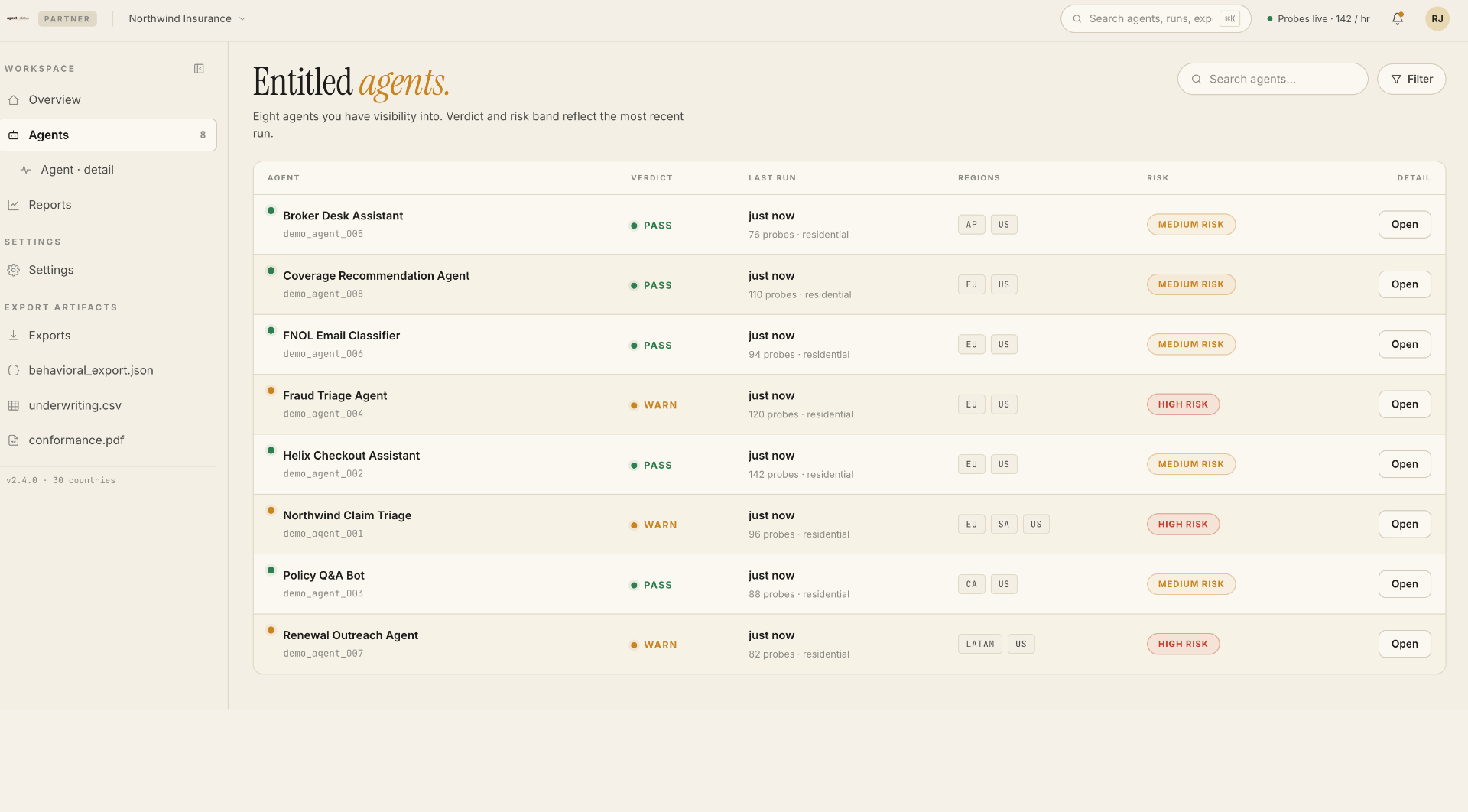
User-side validation isn't theory.We've been running it.
Agents continuously monitored across the global network.
Independent third-party checks run from real residential devices.
Countries covered on real home ISPs.
Why clinical agents need behavioral validation, not pings
An 'up' agent gave wrong triage guidance.
Your symptom checker returns 'monitor at home' to a presentation that should escalate. The endpoint was healthy. The answer was harmful.
You cannot prove what the agent said last Tuesday.
A patient incident report references a conversation from last week. Reconstructing the exact response, in the exact region, is a multi-day forensic exercise.
Drift between model versions changed clinical tone.
An overnight provider update softened the agent's escalation language. Your evals passed. Your nurse-line caught it the next morning.
Independent third-party validation
We test what patients actually receive, not what your traces say.
Validations come from residential exits, behave like real patients, and are scored by a clinical evaluation rubric you control.
- No PHI in validation payloads
- Clinical rubric per agent
- Region-specific symptom variants

Quality Score
A single number that maps to your clinical risk policy.
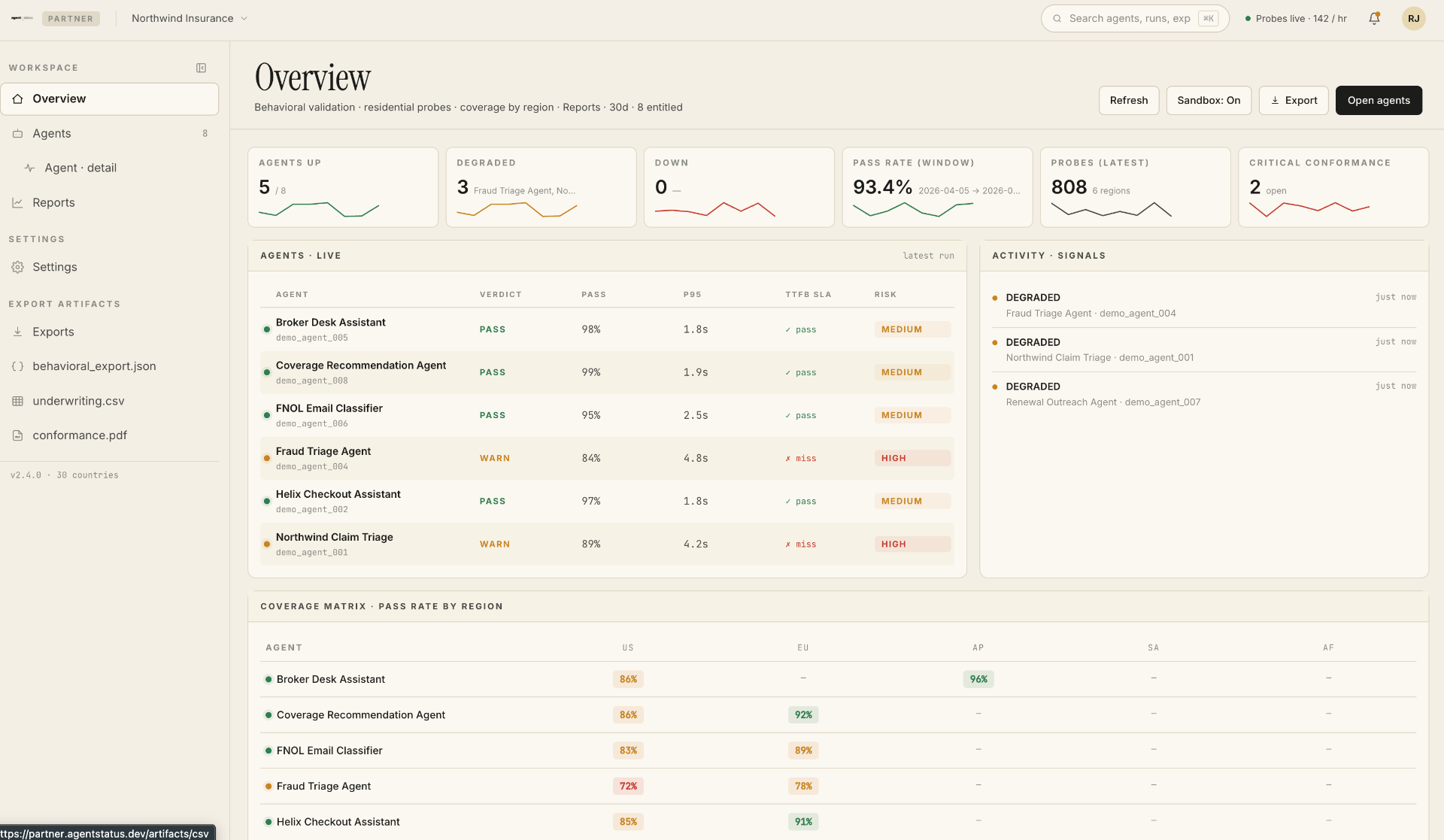
Quality Score combines correctness, escalation accuracy, tone, and latency. Drops below threshold open an incident automatically.
- Configurable threshold per agent
- Linked to PagerDuty and ServiceNow
- Replayable validation evidence
Audit bundle
Reconstructable history of every answer your agent gave.
Every validation is signed, time-stamped, and stored. Pull a 90-day bundle for any agent in one click, formatted for HIPAA and HITRUST review.
- 7-year immutable retention
- Signed JSON + PDF
- Per-region and per-agent rollups
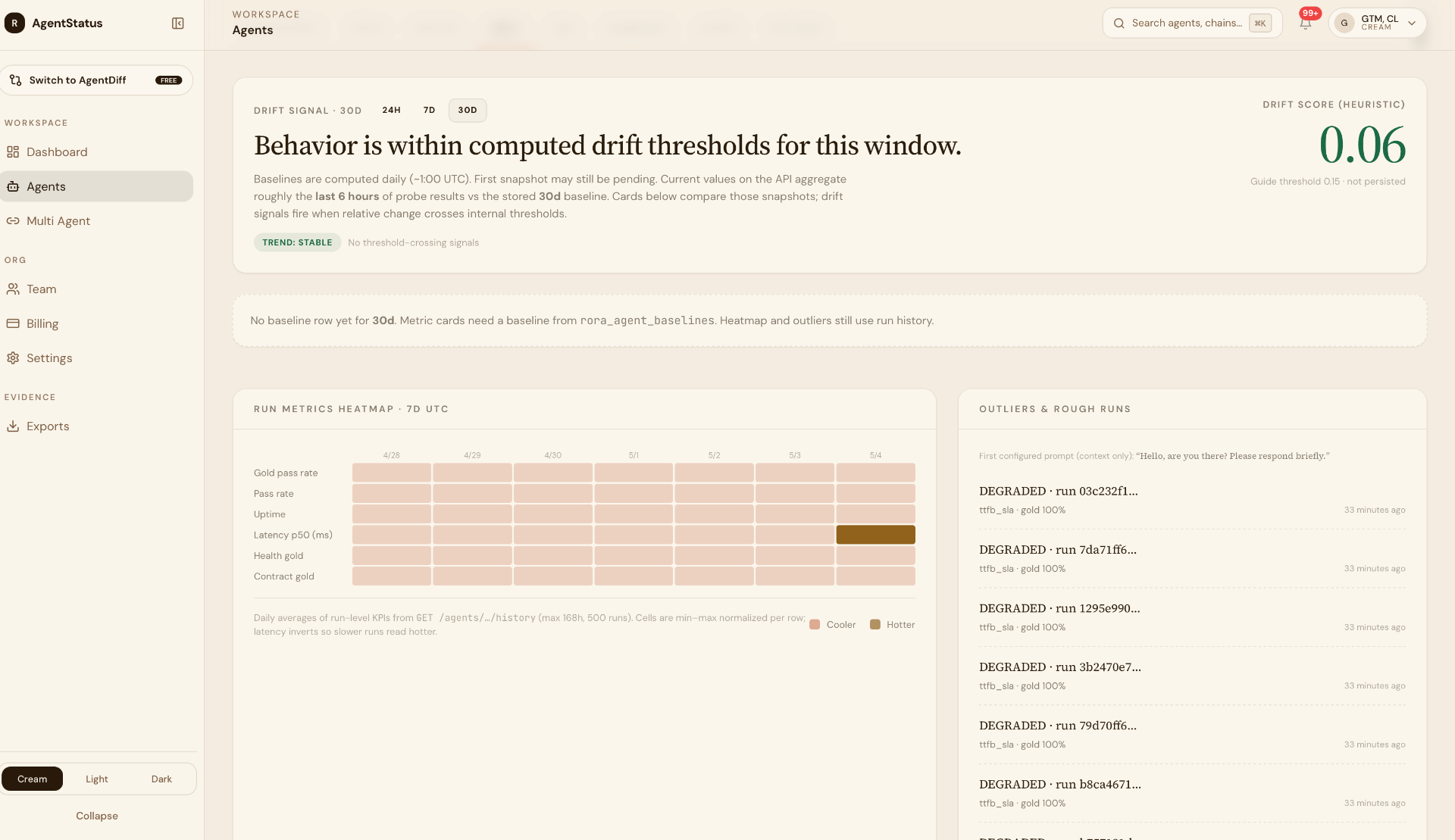
From first validation to signed report in two weeks
Connect
Point Agent Status at the user-facing surface of your agent. No SDK, no instrumentation. Average setup is under five minutes.
Watch
Live verdicts stream in from every region you serve. Drift and latency alerts route to PagerDuty or Slack, with a signed report on every run.
Audit bundle ready for clinical governance review.
Frequently asked
| Question | Answer |
|---|---|
| Does this require PHI access? | No. Validations use synthetic clinical scenarios. We never see real patient data. |
| Can we use our own clinical rubric? | Yes. Quality Score is computed from the rubric you define, reviewed quarterly with our team. |
| How do you handle BAA? | We sign a BAA on enterprise plans and operate under HIPAA-compliant infrastructure with annual SOC 2 Type II attestation. |
| What about asynchronous agents? | We support async agents, WebSocket sessions, and local tunnels for VPC-only deployments. |